Introduction
The matchbox industry remains one of India’s most stable FMCG sectors, driven by steady local demand and strong global exports. With places like Sivakasi and Chennai and leaders such as Stylo Exim, it offers profitable opportunities for both new and established manufacturers.
This blog helps entrepreneurs, investors, and manufacturing businesses understand the real setup cost, machinery requirements, raw materials, and profit insights related to matchbox production. Whether you’re planning to start a new unit or upgrade an existing factory, the information below will help you make well-informed decisions with clarity and confidence.
Why Match Box Manufacturing Continues to Be a Profitable Industry
Matchboxes remain an essential consumer product across households, shops, restaurants, and commercial spaces. Despite the growth of lighters, matchboxes maintain strong demand in regions across Africa, the Middle East, South America, and parts of Asia. India continues to dominate this sector due to:
- Low manufacturing cost per unit
- Easy access to raw materials
- A long-established skilled labour ecosystem
- High global demand for affordable, safe ignition products
- Mass-production capability of Indian exporters
As a result, India has become one of the largest producers globally, with Tamil Nadu being home to many leading names, including Stylo Exim, one of the trusted Match Box manufacturers in India. India’s matchbox sector is growing again as reduced GST and rising global demand increase export volumes, keeping the industry profitable despite higher input costs.
Matchbox Manufacturing Setup Cost Overview
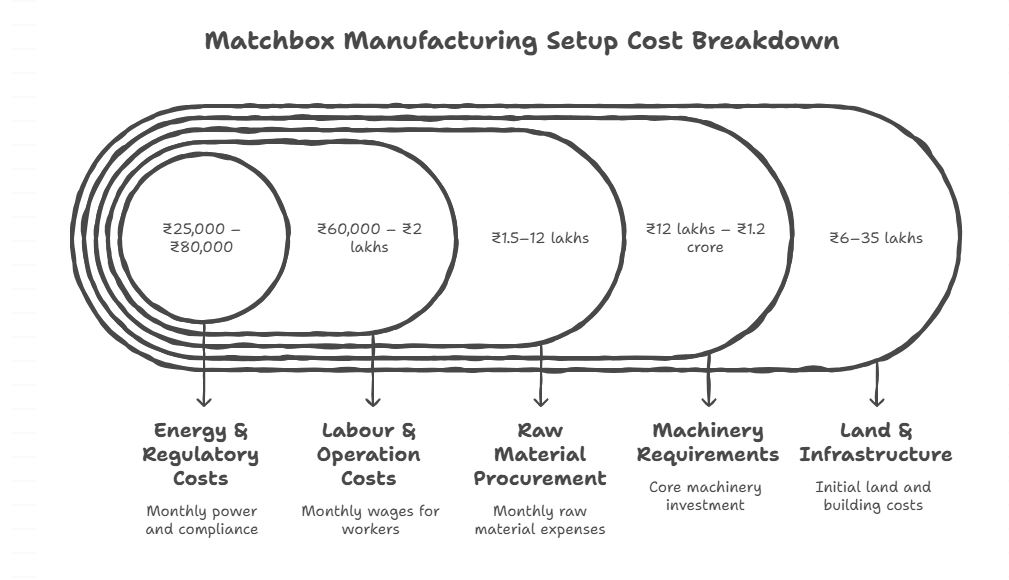
The setup cost varies depending on whether the unit is micro-scale, small-scale, or a fully automated production line. Below is a realistic cost breakdown based on industry standards.
1. Land & Infrastructure:
- Small Unit (800–1,200 sq. ft): ₹6–10 lakhs
- Medium Unit (3,000–5,000 sq. ft): ₹20–35 lakhs
2. Machinery Requirements:
The following machines form the core of a matchbox manufacturing line:
- Splint cutting machine
- Wax/chemical dipping unit
- Box forming & cutting machine
- Filling, packaging & labeling machine
- Drying chamber
- QC tools for ignition testing and durability
3.Investment Range:
- Small unit: ₹12–20 lakhs
- Medium-scale automated unit: ₹50 lakhs – ₹1.2 crore
4. Raw Material Procurement:
Most matchbox companies source:
- Softwood splints (poplar, ayous)
- Red phosphorus
- Potassium chlorate
- Safety strip chemicals
- Duplex board for matchboxes
- Printed outer covers
- Packaging films
5.Monthly Raw Material Cost:
- Small unit: ₹1.5–3 lakhs
- Medium unit: ₹5–12 lakhs
6. Labour & Operation Costs:
- Required manpower: Around 6–20 workers
- Monthly wages: ₹60,000 – ₹2 lakhs, depending on scale
7. Energy & Regulatory Costs:
- Power expenses: ₹25,000 – ₹80,000 monthly
8.Compliance standards required:
-
- BIS Certification
- Fire and safety approval
- Pollution control measures
- Export documentation (for global shipments)
Total Setup Cost Summary
| Unit Category | Estimated Cost |
| Micro / Cottage Unit | ₹8–15 lakhs |
| Small-Scale Unit | ₹20–40 lakhs |
| Medium Automated Plant | ₹50 lakhs – ₹1.5 crore |
| Export-Focused Unit | ₹1.5 – ₹3 crore |
This breakdown helps new investors estimate initial capital and choose the right scale based on market goals, domestic, export, or both. Recent industry surveys show setup costs rising 8–12% annually due to energy and material inflation, pushing manufacturers to adopt efficient, automated systems.
Machinery, Raw Materials & Manpower Requirements
A successful matchbox manufacturing company in India depends on well-coordinated machinery, quality materials, and skilled manpower working together efficiently.
Essential Machinery:
- Box-making machines with high-speed cutters
- Automatic filling systems for consistent match count
- Drying systems to maintain moisture-free splints
- Printing and packaging equipment for branding
Raw Material Quality Importance:
High-quality splints and chemical formulations ensure:
- Smooth ignition
- Long burning time
- Moisture resistance
- Export-grade safety standards
Manufacturers like Stylo Exim use FSC-certified wood, high-quality chemicals, and durable box materials, ensuring consistent performance and safety. This commitment to quality makes their matchboxes highly preferred among importers looking for the best matchbox products in India’s export market.
Manpower Requirements:
Although automation lowers manpower needs, skilled workers remain crucial for managing quality checks, overseeing packaging, maintaining machinery, and safely handling chemical processes throughout matchbox production.
- Quality control
- Packaging supervision
- Maintenance of machinery
- Chemical handling
Need premium-quality matchboxes for your brand or export business?
Contact us at Stylo Exim and email us at info@styloexim.com
Profit Insights: How Much Can Match Box Manufacturers Earn?
Match Box Manufacturers enjoy stable margins due to low production costs and predictable demand. Here is a practical view of earnings:
Manufacturing Cost Breakdown Per Box:
- Raw material: ₹0.70 – ₹1.00
- Labour & overhead: ₹0.20 – ₹0.40
- Printing & finishing: ₹0.30 – ₹0.50
Total production cost:
₹1.20 – ₹1.80 per box
Selling Price:
- Domestic wholesale: ₹2.00 – ₹3.00
- Export price: ₹3.50 – ₹8.00
Profit Margins:
- Domestic market: 20–35%
- Export market: 40–60%
Monthly Profit Projection
| Production Capacity | Monthly Revenue | Profit Range |
| Small Unit | ₹2–3 lakhs | ₹40,000 – ₹80,000 |
| Medium Unit | ₹8–15 lakhs | ₹2–5 lakhs |
| Large Export Unit | ₹25–40 lakhs | ₹6–12 lakhs |
ROI Timeline:
- Small unit: 8–14 months
- Medium unit: 10–18 months
- Export-oriented plant: 12–24 months
This makes matchbox production one of the most accessible manufacturing businesses for steady annual income.
Domestic vs Export Markets: Where Is the Real Profit?
Domestic and export markets offer different profit potentials, and understanding their demand patterns helps matchbox manufacturers maximize revenue and long-term growth.
- African countries
- Middle East
- South Asia
- South America
Domestic Market:
- High-volume orders
- Low profit per unit
- Highly competitive
Export Market:
- Better margins
- Bulk container orders
- Higher quality demands
- Strong repeat business
Manufacturers like Stylo Exim lead in matchbox export from India due to their international packaging standards, chemical stability, and moisture-resistant designs.
Challenges in Matchbox Manufacturing & How to Overcome Them
Matchbox manufacturing faces several operational and quality challenges, but understanding these issues and applying smart solutions helps ensure smooth, efficient, and profitable production.
1. High Energy Costs:
Solution:
- Opt for energy-efficient dryers
- Adopt solar-assisted systems
- Schedule production during off-peak hours
2. Compliance with Safety Standards:
Manufacturers must ensure:
- BIS standards are met
- Proper chemical storage
- Fire-resistant infrastructure
3. Maintaining Quality for Export Markets:
Challenges involve:
- Splint uniformity
- Strike strip adhesion
- Box durability during shipping
Solution: Implement automated QC systems and moisture-controlled storage.
4. Raw Material Consistency:
Using certified wood and high-grade chemicals ensures:
- Smooth ignition
- Longer burn time
- Export approval readiness
Why Stylo Exim Is a Top Matchbox Company in India
Matchbox manufacturing faces several operational and quality challenges, but understanding these issues and applying smart solutions helps ensure smooth, efficient, and profitable production.
- International manufacturing standards
- Global export experience
- High-quality splints and coated matches
- Durable packaging for long-distance exports
- Cost-effective bulk manufacturing
Their strong quality standards, reliable production capabilities, and global export expertise position them as a top matchbox company trusted worldwide.
Final Words
Matchbox manufacturing continues to be a profitable and scalable business for both domestic and export markets. With a clear understanding of setup cost, machinery investment, raw material planning, and profit margins, manufacturers can build a sustainable and highly rewarding unit. With India’s unmatched production capability and companies like Stylo Exim ensuring consistent quality, entering this industry today offers strong long-term potential.
Reach out to Stylo Exim, the trusted choice of global buyers.
Contact us at Stylo Exim and email us at info@styloexim.com
FAQs:
1.What is the minimum investment required to start a matchbox manufacturing unit?
A small-scale unit can be started with an investment of ₹8–15 lakhs, depending on machinery and production capacity.
2.Are matchboxes profitable for both domestic and export markets?
Yes. Domestic markets offer consistent bulk demand, while export markets deliver higher unit-profit margins—making both profitable.
3.What factors influence matchbox manufacturing costs?
Key cost drivers include raw materials, labour, chemical quality, energy consumption, packaging, and regulatory compliance.